Coaching and leadership: What are they and how are they related?

In today's work environment, the concepts of coaching and leadership have become fundamental pillars for talent development and organizational transformation. They are no longer aspirational topics but have become strategic levers within Human Resources. But do we really know what they are, how they relate, and why they are making a difference in people management? If you are part of the HR department in Spain and are looking for ways to develop more conscious leaders, improve your teams' performance, and consolidate a strong organizational culture, this article is for you.
What is coaching and why is it gaining ground in organizations?
Coaching coaching is a methodology of professional development focused on individual support to achieve specific goals, through reflection, self-awareness, and commitment to action. Unlike traditional training, coaching doesn't teach; instead, it helps individuals discover their own answers and enhance their performance. In the business context, executive coaching executive or organizational coaching is focused on leaders, middle management, and, in many cases, entire teams. The objective? To develop key skills such as decision-making, effective communication, emotional intelligence, and the ability to lead in complex environments.
According to an ICF (International Coaching Federation, 2023) study, 86% of companies that invest in coaching state they have recouped their investment, and 96% would do so again.
Benefits of coaching in the workplace:
- It enhances self-awareness and decision-making.
- It improves change management and conflict resolution.
- It fosters individual accountability and intrinsic motivation.
And what do we mean by leadership today?
Leadership leadership is no longer defined solely by hierarchy or authority. Today, we speak of a more human, empathetic, and conscious leadership, where the leader's primary responsibility is not to give orders, but to create the conditions for their team to perform at their best. This implies a profound transformation in the way we lead: listening is valued more than instruction, inspiration more than control, and trust more than constant supervision. Effective leadership requires competencies such as empathetic communication, strategic vision, emotional management, and the ability to adapt to complex environments. It's not just about occupying a hierarchical role, but about exercising transformative influence.
In Spain, 74% of employees believe that having a good leader directly influences their motivation and their decision to stay with a company (InfoJobs Report, 2024).
Coaching and leadership: a strategic relationship
Although coaching and leadership are distinct concepts, their relationship is deeply complementary. Here's the big connection. Coaching isn't just a tool for leaders; it's a way of leading. The so-called 'coach leadership' approach integrates coaching competencies into a leader's daily routine: active listening, powerful questions, constructive feedback, and a focus on people development. It's not about conducting coaching sessions in every meeting, but rather adopting a more supportive, empathetic, and empowering perspective. A leader who incorporates coaching tools doesn't just direct; they develop. They listen actively, ask questions, foster a feedback culture constructive and promotes team autonomy.
What does coaching bring to leadership?
- Leadership styles more collaborative: shifting from control to empowerment.
- Talent development internal: the coach leader identifies and enhances individual strengths.
- Greater team engagement: People feel heard and valued.
- Better decision-making: Through reflection and autonomy.
- Development individual continuous: The leader acts as a catalyst for growth.
- Reducedturnover: Well-led teams stay longer.
Traditional leadership based on authority is losing relevance in volatile and demanding environments. Instead, the coach leader emerges, capable of guiding through trust, shared vision, and human development.
Harvard Business Review indicates that leaders who use a coaching-based leadership style increase team performance by up to 25%.
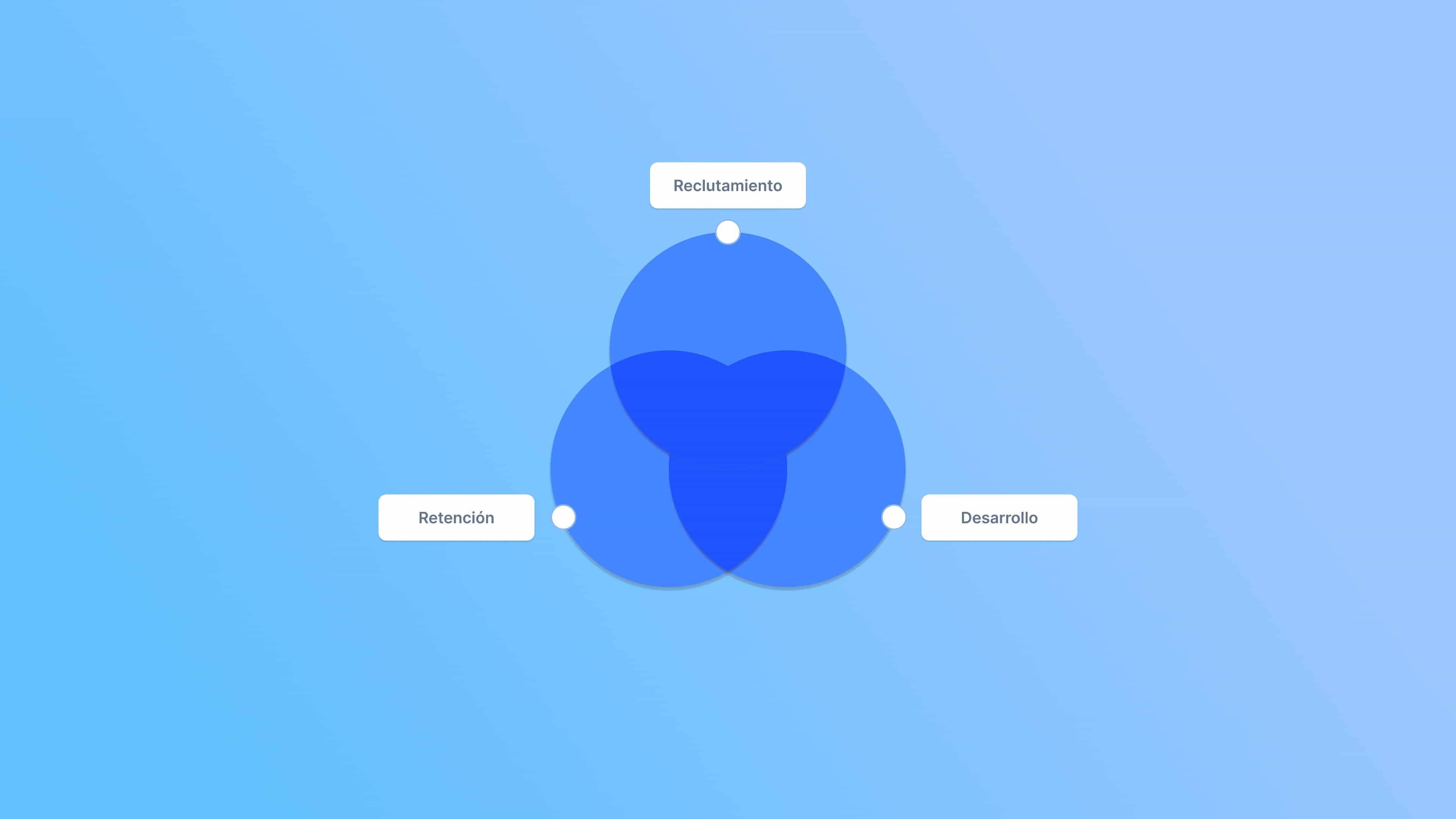
Examples of how coaching and leadership are integrated
- Performance reviews with a coaching approach: instead of focusing solely on metrics, the leader discusses learnings, aspirations, and next steps.
- Change management: a coach leader facilitates the team's emotional transition when facing new strategies or processes.
- Transformative 1:1 meetings: they become spaces for reflection, feedback, and mutual growth.
These practices not only improve the work environment, but also have a direct impact on business results: increased productivity, reduced turnover, and more resilient teams.
How to implement coaching and leadership in your company?
Implementing an approach that combines coaching and leadership doesn't happen overnight. It requires a clear strategy from Human Resources and commitment from management. Here are some practical steps:
1. Assess the current leadership level
Before designing any action, it's crucial to understand where your leaders stand. Do they have the necessary competencies? Are they prepared to lead with a coaching mindset? You can use 360-degree evaluations, performance interviews, or cultural diagnostics as a starting point.
2. Train leaders in coaching skills
Not all leaders are coaches, but all can learn basic coaching skills:
- Active listening
- Non-directive feedback
- Open-ended questions
- Managing difficult conversations
Well-designed training with real-world practice will make all the difference.
3. Incorporate coaching as an organizational tool
In addition to training leaders, you can implement formal coaching processes at key moments:
- New promotions to leadership positions
- Onboarding new leaders
- Underperformance situations
- Organizational transitions
4. Measuring the impact of coaching leadership
Every HR initiative must show results. Measure the impact of coaching on:
- Employee satisfaction and workplace climate
- Employee engagement
- Performance evaluations
- Key talent retention
Why is it crucial for HR to integrate coaching and leadership?
The Human Resources department is responsible for not just promoting hierarchical structures, but for activating leadership models capable of developing people and organizations. In this sense, coaching becomes an essential tool for professionalizing the role of a team leader. Investing in coaching and leadership skills is not an extra; it's a strategic imperative:
- It develops leaders with critical thinking and emotional intelligence.
- Fosters learning-oriented organizational cultures.
- Strengthens autonomy, shared responsibility, and innovation.
If you want leadership and coaching to be a real part of your people management strategy, start by asking yourself these questions:
- How am I currently measuring the impact of our leaders?
- What coaching competencies should be present in our leadership model?
- What support processes could we activate right now?+
Change begins by asking the right questions.
Common obstacles when implementing coaching and leadership (and how to overcome them)
Like any cultural change, adopting coaching leadership faces resistance. Some of the most common are:
- "This isn't for me": Some leaders are uncomfortable with a more human-centric approach. Showing real-world examples and tangible impact is key here.
- Lack of time: Coaching is perceived as "taking too much time." However, leading with coaching actually saves time wasted on conflicts, corrections, or demotivation.
- Difficulty changing habitss: Authoritarian leadership still persists. Here, ongoing support and feedback are essential.
Coaching and leadership training for managers: the drive that transforms teams
At Fresh, we design a leadership training program that transforms managers into catalysts for change, capable of turning challenges into opportunities. When a manager learns to integrate coaching into their leadership style:
- Empowers their team's talent without imposing.
- Initiates valuable conversations that foster commitment.
- Becomes a key agent of culture, innovation, and performance.
Training your managers isn't an expense, it's an High-return organizational investment. In Fresh People , we guide that process with practical tools, an experiential approach, and strategic alignment. Because when your managers grow, the entire organization elevates.





























































































.svg)
.svg)
.svg)

